
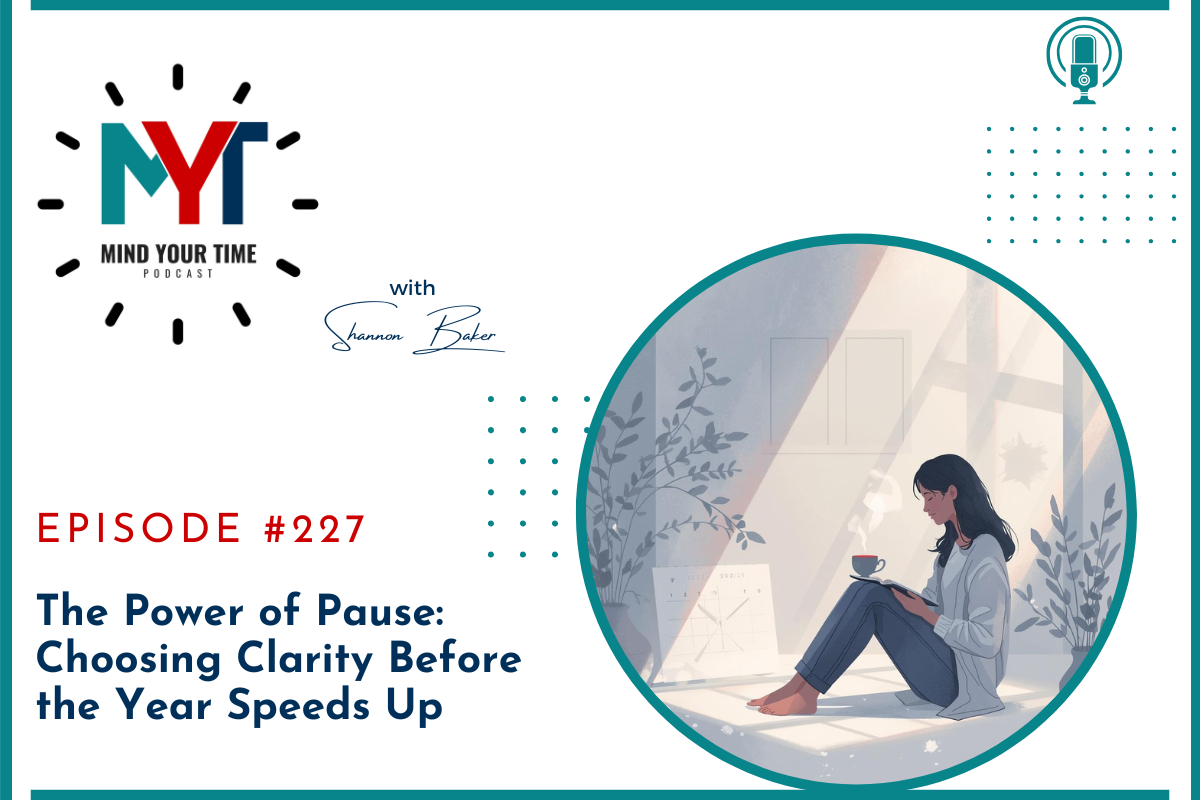
If the year is just getting started and you already feel behind, that pressure isn’t random. It’s often a sign that your business has been operating in survival mode longer than you realized. Understanding how to pause and reset business early in the year can prevent urgency from quietly shaping your schedule, boundaries, and expectations for months to come.
The power of pause isn’t about stopping or slowing down for the sake of rest. It’s about choosing clarity before momentum takes over. When you don’t intentionally pause, you default to reacting and you respond to what feels urgent instead of leading from what actually matters.
Learning how to pause and reset your business operations now gives you space to decide how you want the year to feel before old habits kick back in.
Why Survival Mode Takes Over Before You Notice
Survival mode rarely looks chaotic at first. It often looks like productivity. You’re responsive. You’re flexible. You’re solving problems quickly. But over time, those small decisions create expectations that reshape your availability based on what your clients want and without your consent.
This drift happens quietly:
- flexibility turns into obligation
- availability turns into expectation
- urgency replaces intention
Without a pause, your calendar begins reflecting what others need from you instead of what supports your capacity. This is why many consultants search for how to pause and reset their business when everything looks ‘fine’ on the surface but isn’t actually working behind the scenes.
Pausing helps you identify where your boundaries have softened, where time is leaking, and where survival mode has become your norm.
Pausing Is a Leadership Choice, Not a Setback
Pausing doesn’t mean disengaging or falling behind. It’s a deliberate interruption of reactive behavior so you can choose differently. Pausing lets you remove what’s getting in the way instead of forcing progress.
Small pauses are often the most effective:
- reviewing whether your calendar reflects your real availability
- creating space between meetings to reset your nervous system
- checking in before the day begins instead of immediately responding
These aren’t productivity upgrades. They’re clarity tools. Clarity doesn’t come from moving faster. It comes from removing what no longer works for you.
Why Awareness Alone Isn’t Enough to Create Change
Many business owners recognize that something feels off, but nothing changes. That’s because awareness without structure doesn’t shift how a business operates. It simply makes you more aware of what you’re tolerating.
Understanding how to pause and reset business systems means gaining visibility into:
- where boundaries are being ignored
- where expectations have quietly expanded
- where capacity no longer matches commitments
Waiting for things to slow down doesn’t create clarity either. It allows old patterns to creep back in. Pausing now gives you options before urgency decides for you. The power of pause is choosing to lead with clarity instead of reacting from survival mode. And that decision shapes how the rest of the year unfolds.
Choosing Clarity Before the Year Chooses for You
The power of pause isn’t about doing less forever or stepping away from your responsibilities. It’s about interrupting patterns before they turn into habits you didn’t choose.
When you pause intentionally, you give yourself the space to notice what’s no longer working, protect your capacity, and lead your business with clarity instead of urgency. You don’t need to reset everything at once. You don’t need a full overhaul. You just need to see what’s happening clearly enough to choose differently.
If this reflection surfaced areas where your boundaries have shifted or your expectations have quietly expanded, that awareness is worth paying attention to. Pausing now gives you options. Waiting lets momentum decide for you.
Clarity comes from creating space and choosing it before the year speeds up. If you want help identifying where your boundaries may be leaking, the Boundary Reset Scorecard is a simple place to start.
If you would like to hear the expanded version check out the podcast episode below.
Related Episodes Mentioned:
Resources Mentioned:
⏰ Ready to see where your time is really slipping away?
The Boundary Reset Scorecard is a quick, fillable Google Doc you can complete online in under two minutes. It helps you spot the gaps in your boundaries — from unclear office hours to unsynced calendars — so you know exactly where your time is leaking and what to fix first.
📩 Personalized Support
Reach out at info@theshannonbaker.com to explore your next best step.
Let’s Stay Connected
Follow @mindyourtimepodcast and @the_shannonbaker on Instagram for conversations about boundaries, systems, and building a business that leaves room for your life.
If you're already feeling behind this early in the year, like you need to move faster just to catch up with everyone else, I want you to pause for a moment and stay with me.
That pressure you're feeling right now, it's not random. And it doesn't mean that you're doing anything wrong.
So today we're going to talk about the power of pausing. And I'm not talking about taking time off. I'm not talking about slowing down for the sake of it, but pausing so you can lead your business with more clarity and be more intentional where you spend your time. And by the way, intentional is my word of the year.
And why now? Because this is one of the few moments where you can pause, make a change, and decide that you don't want to keep operating from this rushed place. If you don't want to feel that way for another year, stay tuned.
Welcome to the Mind Your Time Podcast. I'm Shannon Baker, your coffee-loving host, business strategist, and systems expert.
I guide consultants toward systems that protect their time and elevate their expertise. So if you're ready to run a business that supports your life and not the other way around, you're in the right place.
Each episode shares grounded strategies rooted in my POWER in Motion framework to help you lead your client experience with clarity and confidence. So grab a cup of coffee or your favorite beverage, and let's dive in.
If you're already feeling the pressure to move faster because you're behind everyone else, I want you to pause for just a moment.
And I know you don't need or want another reminder to slow down. But I want you to really understand that the way you're feeling right now, it's not random.
That's why I decided to start the year off on the podcast talking about the power of pause. Not as rest. Not as a luxury. But as an intentional decision.
Because the way you move forward in your business right now is either going to reinforce patterns that drain you, or it will create space for something more sustainable to take shape.
And at this moment in time, right now is one of the few times you can still influence how the rest of the year unfolds before that fast pace of life kicks back in, quietly takes over, and makes the decision for you.
Here’s something most people don’t realize.
When you don’t pause, your nervous system stays in a constant state of alert. Everything starts to feel urgent. Everything feels time sensitive, even when it really isn’t.
That’s when you start reacting instead of deciding. You’re accommodating instead of leading. You’re filling space instead of protecting it.
Over time, your calendar begins to reflect what everyone else wants and needs from you, rather than what actually supports you and your goals.
So if you’ve been feeling overwhelmed, scattered, or like you’re always “on,” this isn’t a discipline issue. And it’s not because you’re doing something wrong.
It’s what I like to call a drift.
It happens quietly in the spaces you don’t protect. In the flexibility that slowly becomes expectation. In the small compromises that felt reasonable in the moment, but really weren’t.
Let me illustrate what I mean.
It’s like when a client sends you a text message or a Slack message on a Friday at 6:15 p.m. Even though you’re supposed to stop responding at the end of your office hours, which is 5:00 p.m., you say, “I’ll respond just this once.”
Then the next week, or even the next day, you get another message. It’s longer. And then it starts happening consistently. Almost daily. And a response is expected.
Notice I didn’t say you changed your policy. You didn’t.
But because you didn’t stick to that boundary around your schedule, you created a new policy dictated by that client because you felt it was, and I’ll say this in air quotes, “good customer service.”
Boundaries are invisible barriers that help define reasonable ways people can interact with you if they want your undivided attention.
They’re not just policies. They’re patterns. And those patterns train people how to treat you.
And the only people who get upset when you have boundaries and stick to them are usually the ones who benefited most from you not having them in the first place.
That’s why identifying drift is tricky. It often looks like you’re being productive. You’re handling things. You’re solving problems. You’re showing up.
But that’s the kind of drift that reshapes your boundaries without you realizing it. And that’s why small resets matter.
But you have to pause to notice them.
When you respond from survival mode, even your most responsible decisions can become costly. It doesn’t always happen right away, but over time it drains your energy, impacts your health, and erodes your confidence as a leader.
What I often see with consultants is this internal hope that things will eventually settle down.
After this busy season.
After this project wraps up.
After things feel more under control.
But waiting doesn’t create clarity. Waiting allows old patterns to take deeper root. What you thought was temporary becomes your new normal.
January has a deceptive calm to it. It feels open. Flexible. Forgiving.
But this is actually a small window of opportunity where you can still shape what’s coming next before expectations are set, availability is assumed, and your role becomes reactive again.
If you don’t intentionally pause now, your clients will choose the pace for you. And they won’t choose based on what’s happening in your life. They’ll choose what’s best for them.
That’s why this matters now. Momentum is forming. And once it sets in, you’re managing it instead of designing it.
Pausing doesn’t mean stopping. It doesn’t mean disengaging. And it doesn’t mean falling behind.
Pausing is interrupting reactive behavior long enough to choose differently.
I’m not talking about taking a vacation, creating a vision board, or waiting for a someday reset. Someday never happens.
I’m talking about small, intentional pauses that give you clarity.
Maybe that’s taking fifteen minutes to review your calendar and see if it reflects your real availability.
Maybe it’s adding a buffer between meetings so you can move, eat, or breathe.
Or maybe it’s a quiet check-in before your day begins, so you’re centered before everything starts pulling at you.
These aren’t lifestyle upgrades. They’re small resets.
Clarity doesn’t come from moving faster. It comes from removing friction. And friction usually lives in patterns we haven’t paused to identify.
Here’s where many thoughtful consultants get stuck.
They pause.
They reflect.
They recognize something feels off.
But nothing changes.
That’s because awareness without structure doesn’t change how your business runs. It just makes you more aware of what you’re tolerating.
You don’t need more insight. You need visibility.
Visibility into where boundaries are stretched. Where expectations have quietly expanded. Where capacity no longer matches commitments.
That’s why cycles repeat year after year, even when you’re doing everything “right.”
And that’s why I created the Boundary Reset Scorecard.
It’s not a mindset exercise. It’s not a personality quiz. It’s a grounded check-in you can complete in under five minutes.
It helps you see what’s working, what isn’t, and where your capacity is being stretched too far.
When you can name what’s not working, you can actually change it.
Using this tool now gives you options.
If you wait until you’re overwhelmed, you’re reacting.
If you wait until you’re burned out, you’re recovering.
Right now, you still have room to choose.
You don’t need to fix everything at once. You don’t need to burn your business down. You just need to interrupt the pattern.
If you’re thinking you don’t have time for this, that usually means your time is already being spent in ways you didn’t choose.
If you’re thinking you should be able to handle this on your own, you already have — but you haven’t fixed it. And it’s been costing you.
And if you feel like you just need to push a little longer, that’s survival mode. And we’re working to get you out of that.
Pausing isn’t about doing more. It’s about creating enough space to lead with clarity instead of urgency.
Before we wrap up, let’s recap.
Pausing isn’t just rest. It’s a leadership move that creates calm, clear decision-making.
Survival mode doesn’t always look chaotic. Often, it looks like you’re handling everything — until it starts to drain you.
And awareness alone won’t change how your business supports you. Change happens when you identify leaks and reset them intentionally with structure.
This moment matters not because you’re behind, but because you still have time to choose differently.
If this episode highlighted something you’ve known needed attention, that awareness is worth listening to.
The Boundary Reset Scorecard can help you take the next step with clarity, not pressure. The link is in the show notes.
All you need to do is pause. That’s a decision your future self will thank you for.
Be sure to subscribe so you don’t miss the next episode, where we’ll talk about what comes after the pause and how to move into sustainable success without urgency running the show.
Until then, please honor your capacity. And thank you for being here.

Pingback: What Comes After the Pause: From Survival Mode to Sustainable Success